Cevat FurkanErkara
Embedded systems & FPGA data acquisition. Open to internships from Summer 2027.

One signal, eight channels.
The DAQ in numbers
- input channels
- 8 ch
- sample rate per channel
- 250 kS/s
- lossless compression, FLAC
- ~2:1
- unit running in the field
- 1 live
The signal chain, from sensor to storage
- Sensor
Eight channels come in.
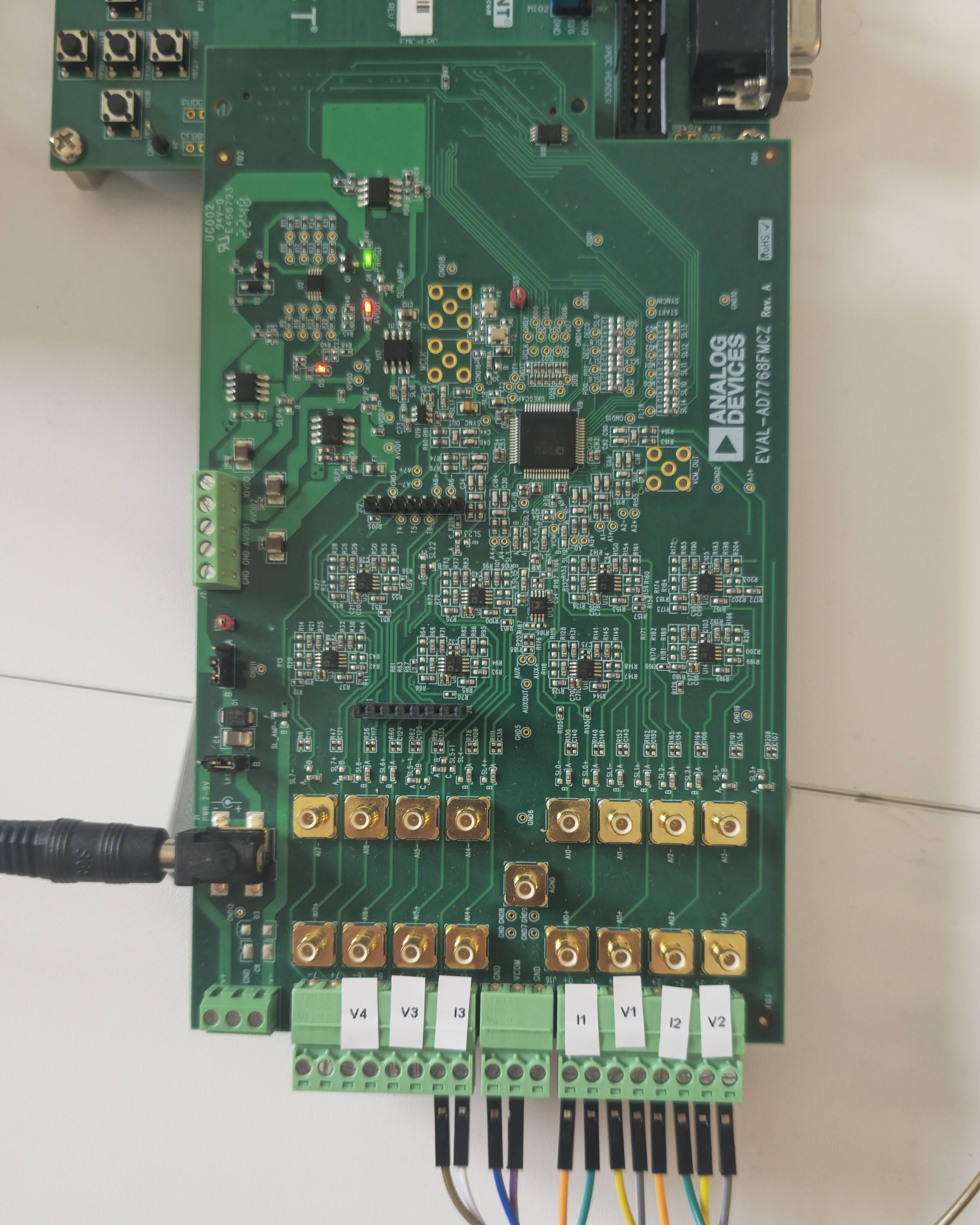
The unit records eight analog inputs at once. Everything after this point exists to get those signals into storage intact.
- ADC
250,000 samples a second, per channel.
The ADC turns each analog voltage into numbers, 250,000 times a second on every channel. At that rate the data never stops arriving, so every stage after it has to keep up.
- FPGA
The FPGA catches every sample.
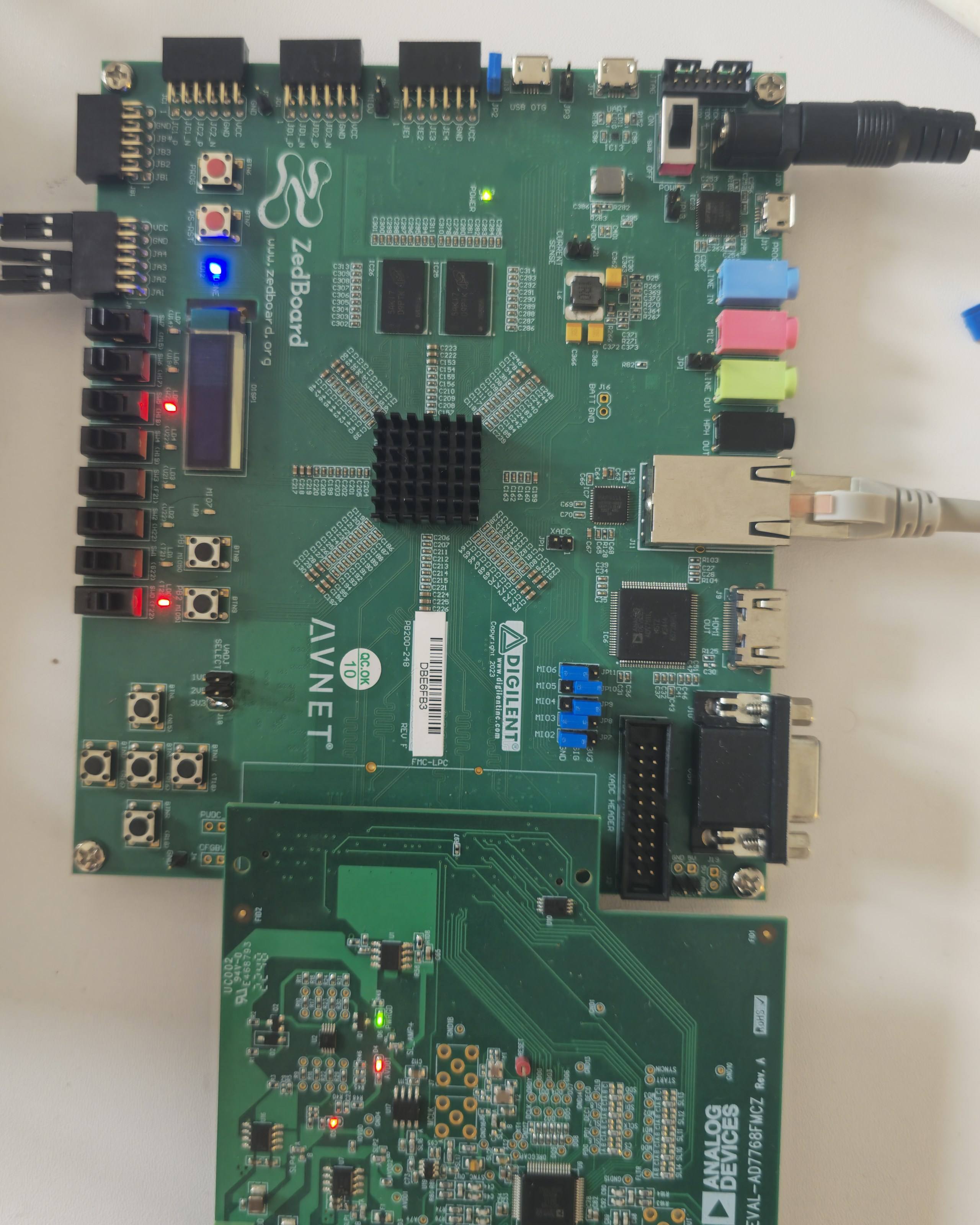
The ZedBoard’s Zynq-7000 (XC7Z020) puts programmable logic and ARM cores on one chip. The logic side reads the ADC with fixed timing and packs the samples, timing a CPU can’t promise.
- DMA
DMA moves the data, not the CPU.
Direct memory access copies blocks of samples from the FPGA into the memory Linux uses, without the processor touching each word. The CPU stays free for everything else.
- ARM · Linux
Linux takes over.
The Zynq’s ARM cores run Linux. From here the samples are ordinary data in memory, and ordinary software can work with them.
- Go service
A Go service streams it out.
A service I wrote in Go reads the sample blocks and sends them on as one continuous stream.
- TCP
Over TCP to the bridge.
The stream travels over a TCP connection, which delivers bytes in order and resends anything lost on the way.
- Bridge PC
The bridge PC receives it.
A PC on the other end collects the stream. The board does the acquisition; the bridge does the heavier work of compressing and uploading.
- FLAC
Compressed about 2:1, losslessly.
FLAC was made for audio, but it suits any sampled signal. It roughly halves the size, and decoding gives back every sample exactly.
- S3 / MinIO
Stored, and running in the field.
The compressed files go to S3-compatible MinIO storage. GitHub Actions and Ansible deploy the software, and one unit runs this whole chain in the field today.
I built this data acquisition chain from scratch at Grid Society in Bergamo, Italy, in summer 2026. Eight channels are sampled at 250 kS/s on a ZedBoard (Zynq-7000 XC7Z020). The FPGA hands the samples over DMA to Linux on the ARM cores, a Go service streams them over TCP to a bridge PC, and FLAC compresses them about 2:1 without loss before they land in S3/MinIO.
It ships with GitHub Actions and Ansible, and one unit is running in the field. Read about the DAQ chain
Projects
3S Li-ion BMS / INA219 driver
A 3S Li-ion battery management system on ESP32, with a register-level INA219 driver on ESP-IDF and FreeRTOS tasks.
Stack: C++ · ESP-IDF · FreeRTOS · CMake · I2C · INA219
Status: Prototype
TTP229 ESP-IDF driver + TCP
ESP32 firmware that reads a TTP229 16-key capacitive keypad and sends the key presses to a TCP server over Wi-Fi.
Stack: C · ESP-IDF · ESP32 · Wi-Fi · TCP · GPIO
Status: Completed
Maker DAQ kit
A data acquisition kit for makers, which I am building with a friend.
Status: Work in progress
ESP32 TWAI (CAN bus) test application
A TWAI (CAN bus) communication core for ESP32 with event-driven telemetry monitoring and loopback testing, under ESP-IDF using C++ and FreeRTOS.
Stack: C++ · ESP-IDF · FreeRTOS · CMake · Clang · CAN bus · TWAI
Status: Completed
Switch Monitor
Status: Under NDA
Lab notes
All notesOwning the Telemetry: Why I Built a Custom ESP32 BMS from Scratch
Ditching the Arduino framework wasn't about elitism; it was a necessary shift from unpredictable polling to deterministic engineering.
Beyond "It Works": Why I Migrated to NixOS for Embedded Engineering
Migrating to NixOS wasn't about trying a new distro; it was a shift from imperative maintenance to declarative engineering.
Experience
Jul 2026 – Sep 2026
Embedded Systems & FPGA Intern
Grid Society S.r.l., Torre Boldone (Bergamo), Italy
Built an FPGA data acquisition chain from scratch: 8 channels at 250 kS/s, from the FPGA to S3/MinIO storage. One unit runs in the field.
Nov 2025 – Jun 2026
Network Automation Developer (Intern)
Afyon Kocatepe University, IT Department, Afyonkarahisar, Türkiye
Built internal network configuration tooling for the IT department.
Oct 2024 – Jun 2028 (expected)
B.Sc. Electrical and Electronics Engineering
Afyon Kocatepe University, Afyonkarahisar, Türkiye
3rd-year student. Relevant coursework: Circuit Analysis, Electromagnetic Field Theory, Low-Level Programming.
Contact
Open to internships and working-student roles from Summer 2027. Email is the fastest way to reach me.
Or write here
It goes to the same inbox as the address above, and I reply from my own address.